
Investors in the 10% and 20% slabs can get better post-tax returns compared to a bank fixed deposit

One of the mistakes most homemakers make while thinking about financial planning is looking at immediate goals, says Amar Pandit.

'Planning for the transfer of assets to the next generation is an important aspect of financial and estate planning.'

rediffGURU and financial planning expert Colonel Sanjeev Govila (retd) answers your personal finance-related questions.

Senior citizens should avoid putting their entire retirement corpus in SCSS.
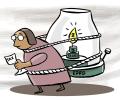
EPF allows partial withdrawal to meet situations like house construction, medical emergency, and so on.

There are, however, a few aspects to factor in before considering G-Secs as an investment option, advises Bindisha Sarang.

Some of these plans will weigh on your pocket. The increase in premium could also be large as you grow older.

Every financial plan needs to be tweaked periodically.

A person in the 30% income tax bracket with a Rs 40 lakh home loan at 9% interest rate would, under the Rs 3.5 lakh interest exemption, will save Rs 105,000 in tax in the first year, against Rs 60,000 under the previous interest exemption of Rs 2 lakh.

K Ramalingam explains the three most powerful signals that indicate your mutual fund's performance

It is a toss-up between liquidity and higher returns; if the tenure is more than three years, FMPs score.

Kiran Kumar Kavikondala, Director, WealthRays Group will talk on investments in equity shares.
Kiran Kumar Kavikondala, Director, WealthRays Group will talk on investments in equity shares.

Banks and financial institutions provide 6-12 months of additional time, beyond which you need to negotiate.

It is not advisable to touch retirement corpus if property is being purchased for investment.
Kiran Kumar Kavikondala, Director, WealthRays Group will talk on investments in equity shares.

Always avoid companies that promise assured returns that are too good to be true.

Rebalance the portfolio at least once a year to ensure it remains in sync with the target asset allocation.

Hena Mehta will answer Your Questions on personal finance on a weekly basis. Please mail your questions to getahead@rediff.co.in with the subject line 'Personal Finance Query' along with your name and Hena will offer his helpful advice.

Take calculated, not blind risks, suggests Ramalingam K.

The EPFO launched one-page simplified forms for withdrawal.
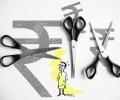
You can reduce your tax burden by wisely using partially taxable allowances, suggests Bindisha Sarang.

Understanding how money works is the first step toward making your money work for you, says Harshad Chetanwala, co-founder MyWealthGrowth.

If your account is idle for over five years, there could be issues with acquiring EPF details.

Evaluate recurring investment products and do the numbers before making any investments.

Use credit cards with discretion and try to generate a net monthly surplus to avoid falling into a debt trap


For ageing parents it is crucial to make a water-tight will.

Cost of health care is rising at a fast clip.

Taxi booking, shopping and transfer of money will be easy.

There is no reason for a child with no dependents to have insurance because insurance is put in place to provide for the child in the event of a parent's untimely death and not the other way around, says Amar Pandit.

For longer tenure products, they offer higher returns compared to other instruments. But for shorter tenures, things are getting tighter for investors.

Resist the temptation to react to every move of the market and remain disciplined with your investments till you reach your financial goal.

Keep at least one family member in the know of all your investments

EPFO may start investing up to five per cent of its incremental corpus in the equity market.

Experts say it's better to transfer the amount to one's current EPFO account than opting for a withdrawal.

While proper financial planning is a subject in itself, in my experience, to increase levels of financial safety and security, a person needs to avoid a few basic mistakes, says Parag Raja

The curious thing is that savings instruments have not really kept pace with changing needs, although people have access to a wider variety than before.

There will be higher charges for bank account-holders.
